
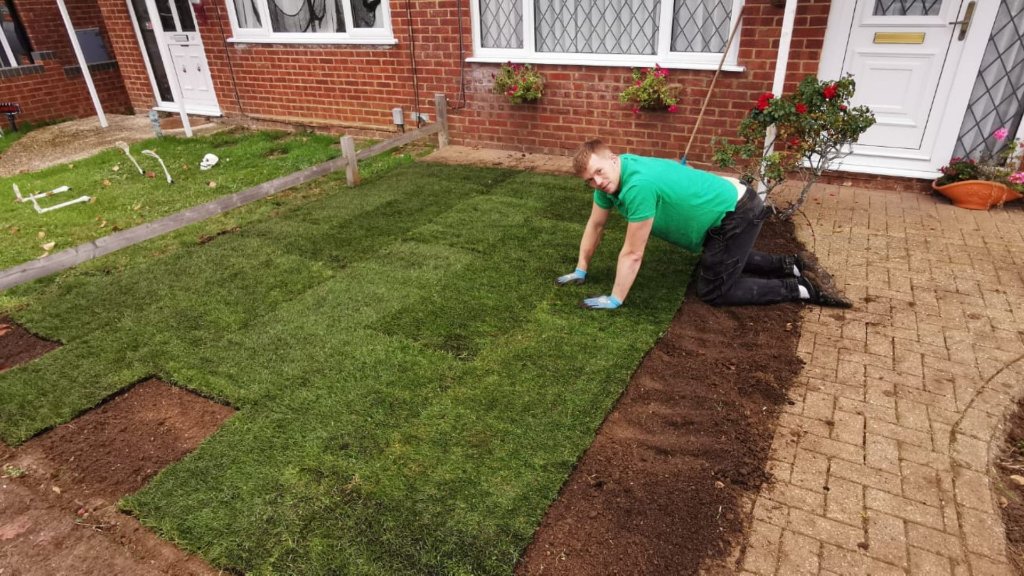
The timing of turf laying is a question our Basingstoke clients ask often. As passionate landscape gardeners with years of experience, we know that getting the timing right makes all the difference to successful turf installation.
March, April, and May are the best months to lay turf in the UK. Your new lawn gets perfect conditions to grow strong roots before summer hits. Early autumn, especially September, is another great time. The ground stays soft but not waterlogged, which makes preparation easier than at other times of year.
Key Takeaways
- Spring (March-May) offers optimal conditions - soil temperatures 50-65°F promote active root growth
- September provides a 'golden window' - cooler air with warm soil before winter
- Avoid summer and winter - extreme heat or frost prevents proper rooting
- Proper ground preparation is non-negotiable - rotavate to 15cm, clear all weeds
- Water twice daily for 3 weeks, wait 2-3 weeks before first mow
Why Timing Matters for Turf Success
Proper timing makes all the difference to turf success. A beautiful, healthy lawn or a disappointing patchy mess depends on how well you work with nature's calendar. Grass starts growing actively when soil temperatures climb above 50°F in spring, that's why March to May gives you the best conditions. The grass develops strong roots while enjoying mild temperatures and natural rainfall.
September creates what experts call a "golden window". The soil stays warm while temperatures cool down gradually, allowing strong root development without the stress of extreme temperatures.
Spring: The Best Time to Lay Turf
March, April, and May beat all other months. The soil stays soft but not waterlogged, perfect for preparation. By March, winter's harsh frosts have usually passed, letting the soil warm up naturally to temperatures between 10-15°C. Under normal conditions, turf laid in early spring develops solid roots in just 2-4 weeks.
Spring's longer days are another big plus. More daylight helps turf grow faster as grass turns sunlight into energy. Grass needs about 4-6 hours of direct sun each day to thrive, and spring's longer days provide exactly that.
Autumn: A Close Second
Autumn gives you another great window of opportunity. Early-to-mid autumn conditions are just as good as spring months. The soil keeps its summer warmth which helps root growth, while the air has cooled down considerably.
Your new turf gets about six months to set down strong roots before summer heat arrives. Natural autumn rainfall also cuts down on watering work, you get consistent moisture levels without the heavy watering schedule needed for summer installations.
Why Summer and Winter Are Risky
New turf faces major obstacles during summer. The heat makes fresh turf dry out fast, sometimes within hours. You might need to water two or three times each day. "Turf heating" is a serious risk: when rolls sit in high heat and humidity, the interior becomes hot and kills the plants within 24 hours.
Winter brings frozen ground, short days, and cold temperatures that crack wood. Frost freezes water inside plants, walking on frozen grass breaks the ice crystals and punctures the tissue. Always avoid laying turf on frozen ground.
Preparing the Ground
A successful turf installation starts with proper ground preparation. Even perfect timing won't save you if your soil isn't ready.
- Clear all weeds and debris, never lay turf over existing grass
- Rotavate the whole area to at least 15cm depth
- Remove stones and level the surface thoroughly
- Add 10-15cm of quality topsoil if needed
- Apply a phosphate-rich pre-turf fertiliser to boost root establishment
Aftercare Tips
- Water twice daily for the first three weeks, morning and evening
- Keep soil consistently damp but not soggy
- Check edges often as they dry out faster than the middle
- Wait 2-3 weeks before first mowing, set mower to highest setting
- Never remove more than one-third of grass height per cut
- Allow 6-8 weeks before heavy foot traffic
Frequently Asked Questions
What is the ideal time of year to lay turf in the UK?
The best time is during spring (March to May) or early autumn (September). These seasons provide optimal conditions for root establishment with mild temperatures and adequate moisture.
How should I prepare the ground before laying turf?
Clear all weeds and debris, rotavate the soil to at least 15cm, level the surface, and add quality topsoil if needed. Ensure the soil is well-draining yet moisture-retentive.
How often should I water newly laid turf?
Water newly laid turf twice daily for the first three weeks, preferably in early morning or evening. Gradually reduce watering after this period.
When can I start mowing my newly laid turf?
Wait approximately 2-3 weeks before the first mow, or until the turf has properly rooted. Set your mower to its highest setting and never remove more than one-third of the grass height.