
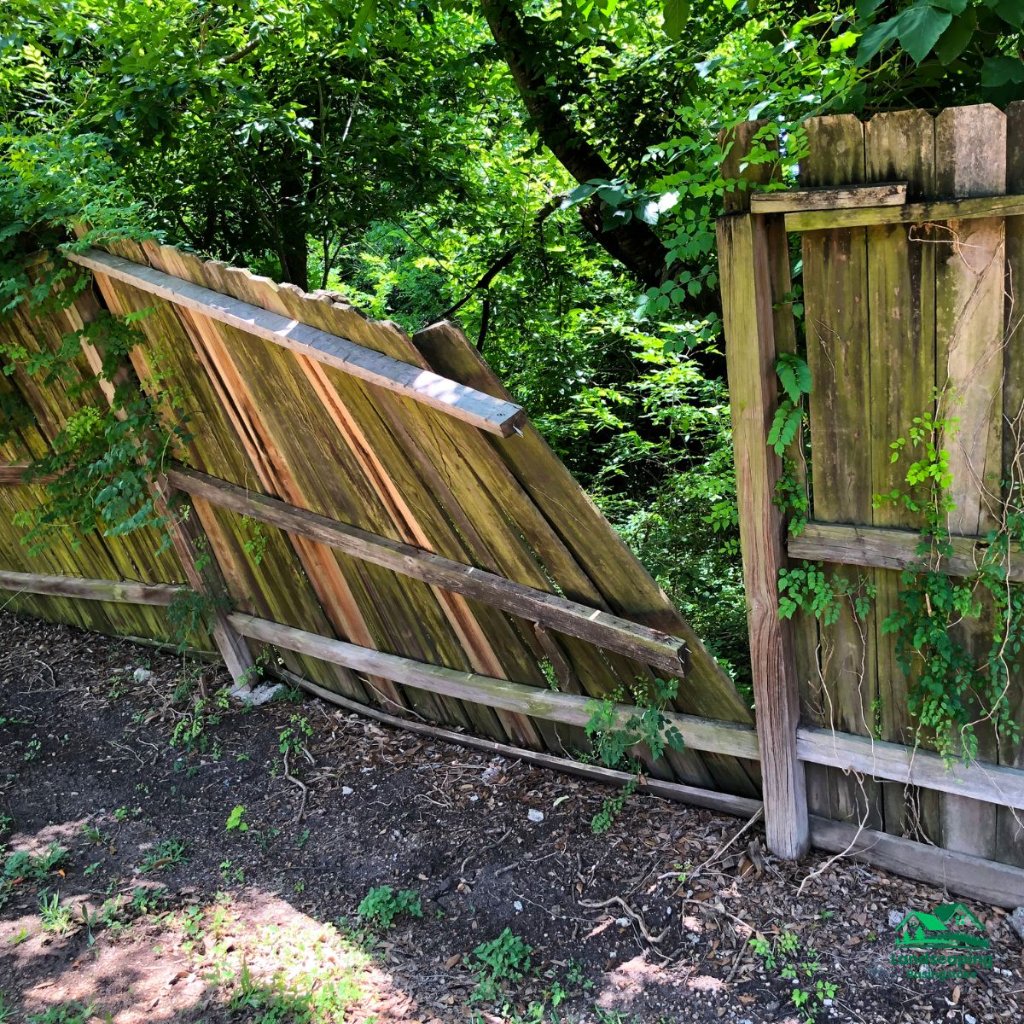
Understanding fencing boundaries is one of the most common headaches for UK homeowners. From working out who is responsible for fencing boundaries to getting your head around garden fencing rules, boundary fencing rules UK-wide can feel confusing. This guide explains the fencing regulations UK homeowners need to know, including garden fence height rules UK and when planning permission applies, so you can make confident decisions about your boundary.
Who Is Responsible for Fencing Boundaries?
There is a widespread myth that you are always responsible for the fence on the left, or the right, of your property. In reality, there is no automatic legal rule that decides this. Working out who is responsible for fencing boundaries starts with your property's title deeds.
Your title deeds, and in particular the Land Registry title plan, often show boundary ownership using what is called the "T mark" system. A "T" mark drawn on the inside of a boundary line points into the property that owns and maintains that fence. If you see an "H" mark (two T marks joined together), it usually means the boundary is a shared responsibility between both neighbours.
To find out which fence belongs to you, request a copy of your title register and title plan from HM Land Registry - it costs a few pounds and is the most reliable starting point. Look for T marks, and read any covenants or boundary agreements noted on the register.
When the deeds are unclear or silent on ownership, no one is legally forced to erect or maintain a boundary fence at all. In these cases, boundaries are often maintained by agreement, custom, or simple goodwill between neighbours. If a fence falls into disrepair and the deeds do not assign responsibility, the practical solution is usually a friendly conversation and a shared arrangement. If you are planning new work, our team can advise on the best position and type of fence for your boundary.
Garden Fence Height Rules in the UK
Garden fence height rules UK homeowners follow fall under "permitted development", meaning you can build up to a certain height without applying for planning permission. As a general rule:
- Rear and side gardens: fences up to 2 metres in height are usually allowed without planning permission.
- Front gardens (next to a road or footpath): the limit drops to 1 metre in height.
If you want a fence taller than these limits - for example a 2.4 metre fence for extra privacy, or a front boundary fence above 1 metre - you will normally need to apply for planning permission from your local authority. It is also worth remembering that these are maximum heights measured from ground level, and different rules can apply if your property sits on a corner plot or beside a busy highway.
Do You Need Planning Permission for a Fence?
For most standard garden fences within the permitted development heights above, you will not need planning permission. However, permission is required in several situations:
- The fence exceeds the permitted heights (over 2 metres, or over 1 metre next to a road).
- Your home is a listed building, or the fence would be within the curtilage of one.
- Your property is in a conservation area, where extra restrictions frequently apply.
- A planning condition or "Article 4 direction" has removed permitted development rights for your property.
If in doubt, always check with your local planning authority before starting work - it is far cheaper than being told to take a fence down. You can confirm the current rules on the government's Planning Portal. For larger projects, our professional fencing services in Basingstoke include advice on heights and permissions as standard.
How to Check Fence Ownership at the Land Registry
Land Registry fence ownership is the only reliable evidence most homeowners can get. Search your address on the HM Land Registry "Find a property" service, then download two documents: the title register (the written record, including covenants and any boundary agreements) and the title plan (the drawing, which is where T marks appear). Both cost a few pounds each.
Two important points. First, the red line on a title plan shows only general boundaries - it is not accurate to the centimetre, and it does not prove exactly where a fence should sit. Second, an absence of T marks does not mean nobody owns the fence; it simply means ownership was never recorded, in which case custom, older conveyance documents and any written agreements between previous owners become the evidence.
How Far From the Boundary Line Should a Fence Go?
There is no fixed legal setback from the property line for a domestic garden fence in the UK. The rule of thumb is simple: build entirely on your own land, with the outer face of the posts and panels up to - but not over - the boundary. Many people leave a small margin of 50 to 100mm so that posts, gravel boards and concrete footings stay clearly on their side.
That margin matters practically as well as legally. If you build tight to the line, you cannot maintain, treat or replace the far side of your own fence without stepping onto your neighbour's land, which you have no automatic right to do. Where the fence sits on a shared boundary, agree the position in writing before work starts.
Front Garden Boundary Fence Law in the UK
Front boundaries have stricter limits than rear gardens. Where a fence, wall or gate adjoins a highway - including a footpath or pavement - the permitted development height drops to 1 metre. Anything taller needs planning permission, and councils do refuse applications where a tall front boundary would obstruct sightlines for drivers or pedestrians, particularly on corner plots and near junctions.
A few extra points that catch people out on front boundaries: height is measured from the ground level on the higher side; a trellis topper counts towards the total height; and hedges are not covered by these rules at all, though the Anti-social Behaviour Act 2003 high hedges provisions can apply to evergreen hedges over 2 metres. Gates opening outwards over a public pavement are also generally not acceptable.
Boundary Fencing Rules Between Neighbours
Boundary fencing rules UK-wide are designed to keep good relations between neighbours. When you erect a fence, it should sit on your own land, right up to but not over the boundary line. Building even slightly onto a neighbour's land can lead to disputes and, in some cases, a claim for trespass.
The Party Wall etc. Act 1996 mainly covers shared walls and excavations near a neighbour's structure rather than ordinary timber fences, but it can become relevant if you are replacing a boundary wall or digging deep foundations close to your neighbour's property. In those cases, you may need to serve notice on your neighbour before starting.
If a neighbour is disputing ownership or responsibility, keep things calm and evidence-based. Start by comparing title deeds and plans, look for T marks, and try to reach a written agreement. Mediation is far quicker and cheaper than legal action, and most boundary disagreements are resolved with a sensible conversation and a fresh, correctly-positioned fence.
Can My Neighbour Paint or Alter My Fence?
If a fence belongs to you, your neighbour cannot paint, stain, alter, or attach things to your side of it without your permission. They also cannot remove it or lean heavy items against it in a way that causes damage.
What they can do is grow plants up their side, or (with your agreement) treat their side to keep it looking tidy. If a neighbour has altered your fence without asking, a polite conversation is almost always the best first step - and clarifying ownership with your deeds helps avoid the same issue in future.
How Much Does Fencing Cost in Basingstoke?
Once you know the rules, the next question is cost. In Basingstoke, standard closeboard or feather-edge fence panels typically cost around £30 to £60 per panel for materials, with pressure-treated timber at the lower end and composite or premium panels higher. Posts, gravel boards and concrete add to the total.
Labour usually runs from around £150 to £300 per day depending on access, ground conditions and how many old panels need removing and disposing of. The biggest factors affecting your overall price are fence height, the length of the run, whether existing fencing needs clearing, and the material you choose.
For a precise figure, it is always best to get a site visit and a written quote. Alongside fencing, we also offer garden maintenance in Basingstoke and full hard landscaping services, so we can handle your whole boundary and garden in one go.
Need a Fencing Quote in Basingstoke?
Landscaping Basingstoke provides professional fencing and boundary installation across Basingstoke and Hampshire. For expert help, explore our professional fencing services in Basingstoke, or get in touch today for a free no-obligation quote.