
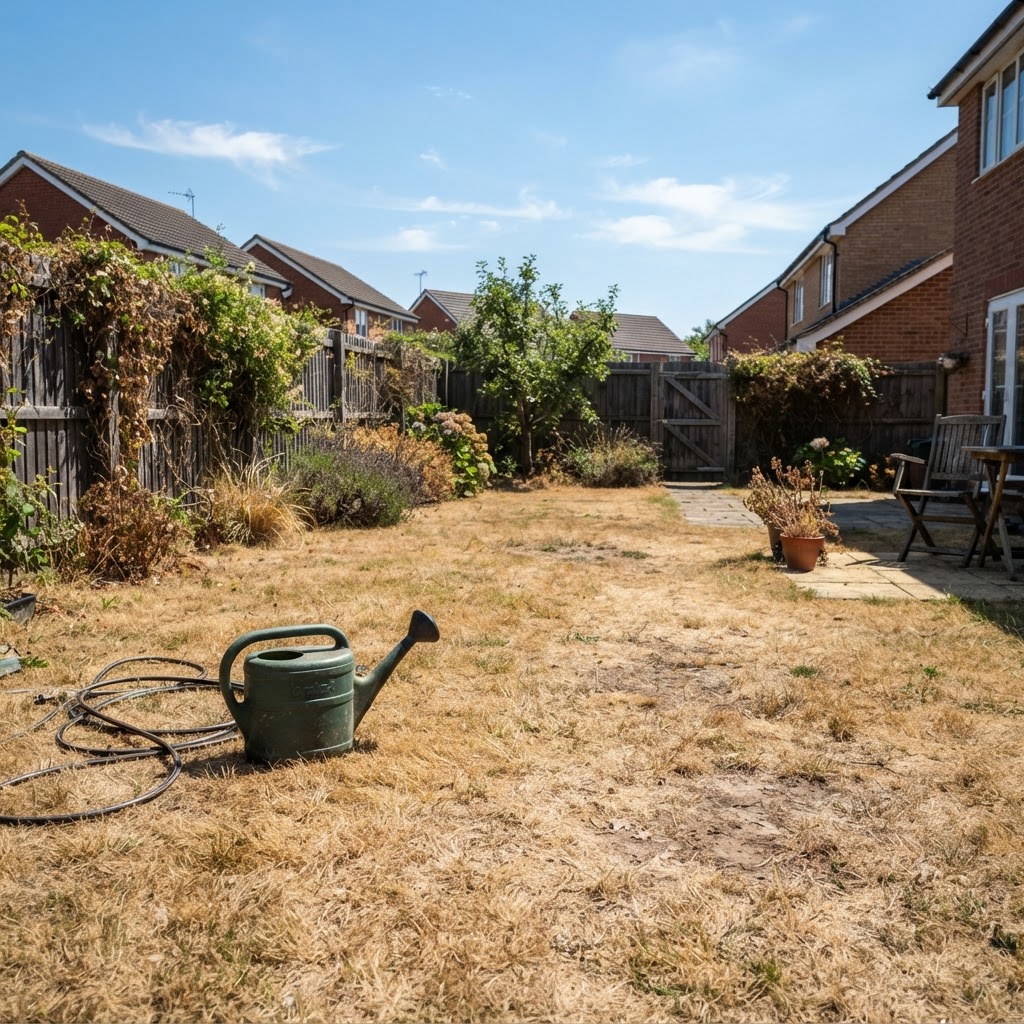
If your lawn has gone from green to straw in a matter of weeks, you're not alone, and you haven't done anything wrong. The recent heat across Basingstoke has scorched gardens right across the town, and with a hosepipe ban now in force, a lot of people are watching their grass turn brown and feeling powerless to stop it.
The good news: in most cases your lawn isn't dead, it's dormant. And with the right approach now, and a bit of patience for when the rain returns, it'll bounce back. Here's what's actually happening to your grass, what you can and can't do under the hosepipe ban, and how to stop weeds taking over the bare patches while you wait.
Why the heat turns your lawn brown
Grass browning off in a heatwave is a survival mechanism, not a death sentence. When water gets scarce and temperatures soar, grass stops putting energy into green growth and goes dormant to protect its roots and crown. The blades go brown and crispy, but the plant underneath is often still alive, just waiting it out.
This is exactly what's happened across Basingstoke this summer. A dry spring followed by sustained heat has left the ground baked hard and the grass with nothing to draw on. Lawns on sandy or shallow soil, and south-facing gardens that cop the full sun, have been hit hardest.
The hosepipe ban: what you can and can't do
Basingstoke falls within the supply areas of South East Water and Southern Water, and both have hosepipe bans (officially "Temporary Use Bans") in force across Hampshire this summer. Under the ban, you cannot use a hosepipe or sprinkler to water your garden, and the fines for breaking it can be steep.
But here's the part most people miss: a watering can or a bucket is always allowed, even during a hosepipe ban. The restriction is on hosepipes and sprinklers, not on watering itself. So you're not completely stuck, you just have to be more deliberate about it.
Water you can use freely during the ban
- Water butt rainwater - Unrestricted, so if you have a butt, use it freely.
- Grey water - From washing up, baths or rinsing vegetables (as long as it's not full of harsh chemicals or bleach) is fine to tip on established lawns and borders.
- Leftover water - From pet bowls, cooking (once cooled) and similar can all go on the garden rather than down the drain.
If you want to keep a lawn ticking over during the ban, a watering can of collected water in the cool of the evening, focused on the areas that matter most, does far more good than you'd think.
Should you even bother watering the lawn right now?
Honest answer: for an established lawn, not really, and trying to keep it green through a heatwave with a watering can is a losing battle anyway. The smarter move is to let it go dormant and save your effort (and water) for the plants that actually need it, like newly laid turf, young plants, pots and vegetable beds, which will genuinely die without water rather than just going dormant.
The exception is new turf or a recently seeded lawn. Those haven't developed the deep roots to survive dormancy, so they do need keeping damp, using a watering can of collected or grey water, or they'll be lost. If we laid your lawn recently, this is the one to prioritise.
For everything else, the best thing you can do for a dormant lawn is often to leave it alone: stop mowing it (cutting stressed grass makes it worse), keep off it as much as you can, and wait for the rain.
What to do when the rain finally comes
This is where your lawn's recovery really happens, and there are a few things that make a big difference once the weather breaks.
1Let it recover before you touch it
When the rain returns, most dormant lawns green up on their own within a couple of weeks. Resist the urge to mow straight away, let the grass get some growth and strength back first. When you do mow, keep the blades high (don't scalp it) so you're not stressing grass that's still recovering.
2Give it a feed once it's growing again
A gentle autumn lawn feed, applied when the grass is actively growing and the soil is moist, helps it thicken back up and recover faster. Don't feed dry, dormant grass, it does nothing and can scorch.
3Deal with the genuinely dead patches
Some areas won't come back, especially where the grass was already thin or the soil is poorest. These bare patches are where your real problem starts, because bare soil doesn't stay bare for long.
The weeds problem: why bare patches are a race against time
Here's the thing that catches people out. When heat kills off patches of lawn, it leaves bare soil, and bare soil is an open invitation for weeds. Weeds are far tougher and more drought-tolerant than lawn grass, so while your grass is struggling, weeds like dandelions, clover, plantains and coarse weed grasses move straight into the gaps and take hold.
Left alone, what started as a heat-stressed lawn becomes a weed-infested one by next spring. The weeds establish over autumn, seed, and come back stronger, and suddenly you're not looking at a lawn that needs watering but one that needs renovating.
How to stop the weeds winning
- Re-seed bare patches - Once the weather cools and the rain returns (early autumn is ideal timing in Hampshire). Grass seed sown into prepared soil will germinate and fill the gaps before weeds can dominate.
- Keep on top of weeds as they appear - Removing them from bare areas so they don't seed and spread.
- Feed and overseed the whole lawn in autumn - To thicken it up, because a dense, healthy lawn is the best weed suppressant there is, weeds struggle to get a foothold where grass is thick.
The bottom line
A brown lawn after a Basingstoke heatwave usually isn't dead, it's dormant, and most established lawns recover once the rain returns. During the hosepipe ban, save your watering (from a can or collected water) for new turf and plants that genuinely need it, and let an established lawn ride out the heat. The real work comes in autumn: repair the bare patches, feed and overseed, and stay ahead of the weeds before they claim the gaps the heat left behind.
If your lawn has taken a real battering this summer, or the weeds have already started moving in, that's exactly the kind of work we sort. From autumn lawn renovation and overseeding to full returfing where a lawn is beyond saving, we'll get your garden back to how it should be, and as a fully licensed waste carrier, all the old growth and green waste leaves with us.
Covering Basingstoke and the surrounding Hampshire area. Get in touch for a free, no-obligation quote.